

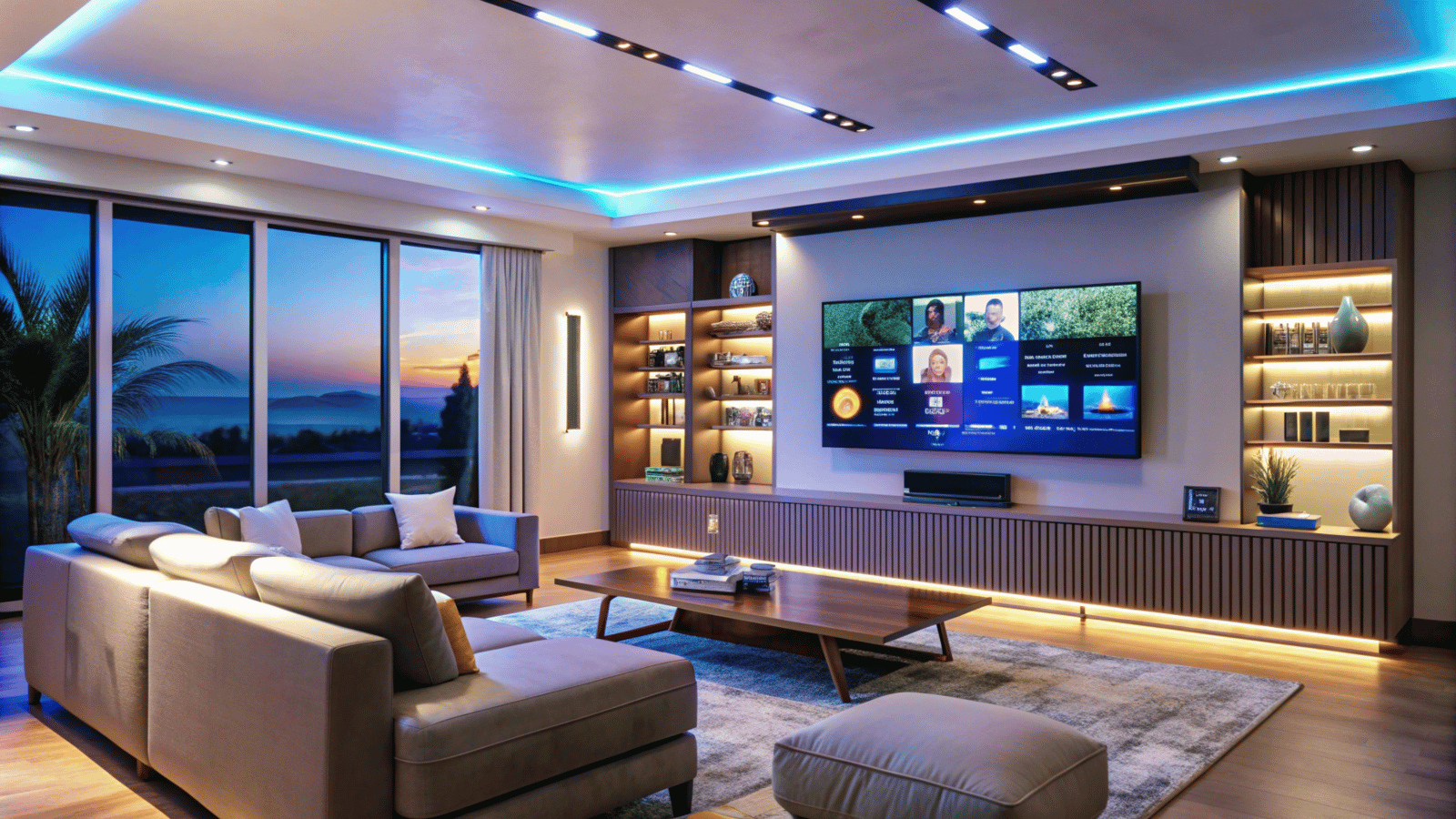
The home cinema experience has undergone a radical transformation. In 2026, the focus has shifted from simply “bigger screens” to “better experiences.” Two technologies are leading this charge: MicroLED displays and advanced Spatial Audio systems. Together, they are blurring the line between the living room and the commercial theater.
The MicroLED Revolution
While OLED has long been the gold standard, MicroLED is the new frontier. These displays offer the perfect black levels of OLED but with significantly higher brightness and no risk of burn-in. More importantly, MicroLED is modular. This means consumers are no longer restricted to standard TV sizes. You can now customize your display to fit an entire wall or create non-traditional aspect ratios, offering a truly bespoke viewing experience that adapts to your architecture.

Immersive Soundscapes with Spatial Audio
Visuals are only half the story. Spatial audio has moved beyond simple surround sound to create a three-dimensional “bubble” of audio. Using AI-driven room calibration, modern sound systems can map the acoustics of a room in seconds, bouncing sound waves off walls and ceilings to place audio objects precisely in space. Whether it’s the sound of rain falling above you or a car racing past your ear, the level of immersion is unprecedented.

The Rise of “Event” Viewing
With these technological leaps, the home has become the primary venue for “event” viewing. From immersive sports broadcasts that make you feel like you’re on the sidelines to virtual concerts with 360-degree sound, the home entertainment system is no longer just for watching movies—it’s a portal to global experiences, delivered with a fidelity that was once impossible.
Text author: Ana Markunović


Recent Comments